Pet-Friendly Interior Design: 5 Fundamentals for a Family Home That Works
A beautiful home is one thing. A beautiful home that survives muddy paws, spilled juice and a toddler using your ottoman as a launchpad is another thing entirely. The good news: you don't have to choose between the two. With the right pet-friendly interior design approach, a family-friendly home can still feel considered, layered and genuinely yours — it just takes a bit of planning up front.
Here are the five fundamentals I come back to on every project.
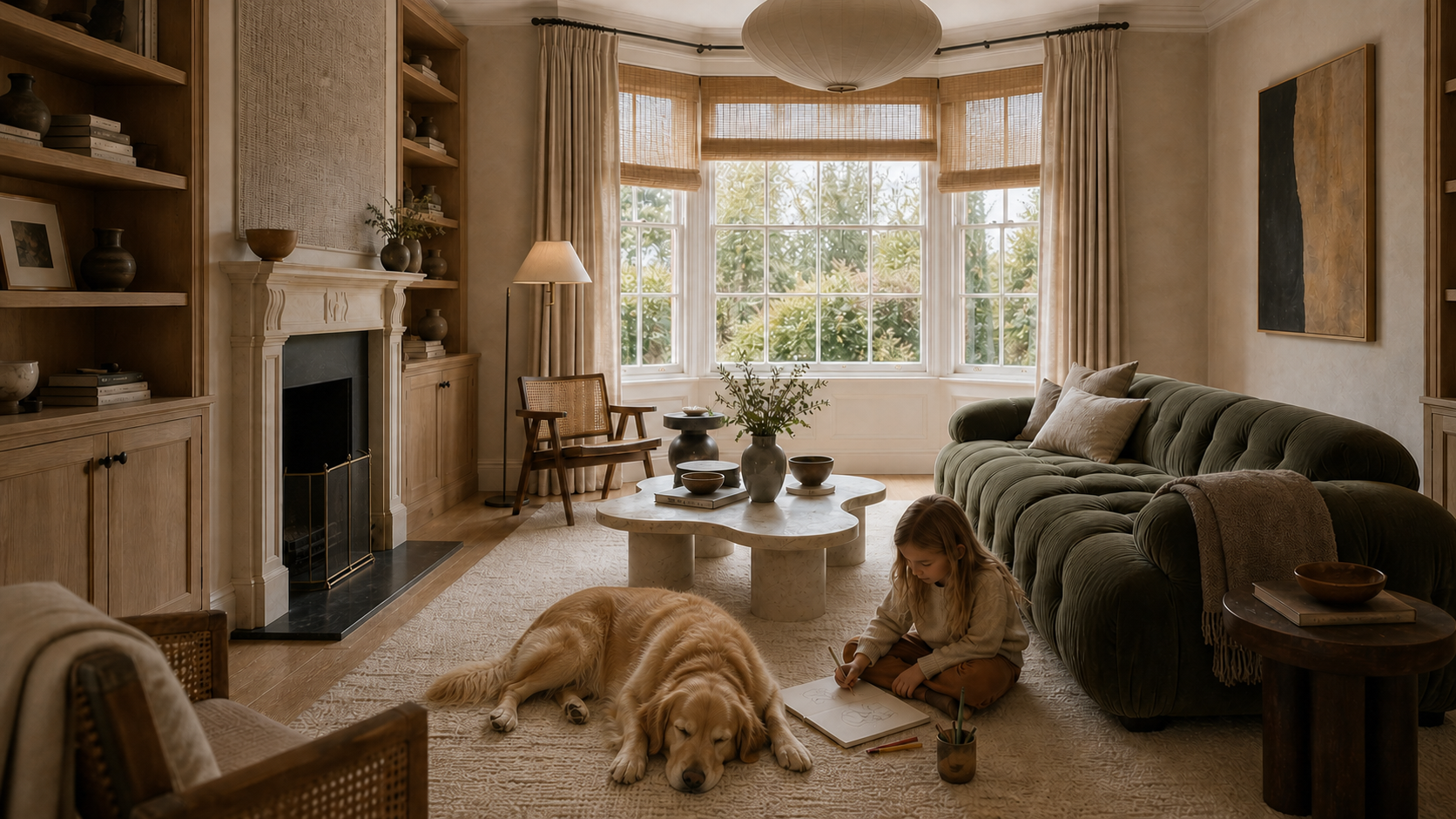
Here are the five fundamentals I come back to on every project.
1. Choose Child and Pet-Friendly Materials That Last
Everything in a busy home gets tested eventually, so material choice is where good design either holds up or falls apart. Look for performance fabrics (think indoor/outdoor grade or anything labelled bleach-cleanable) on anything upholstered, sealed or oiled woods rather than raw finishes, and stone or porcelain over anything porous in high-traffic zones. Washable rugs are the same story — a low-pile wool or a flatweave will forgive far more than a shag ever will, and can go straight in the machine when muddy paw prints show up.
The trick is picking pet-proof, kid-safe materials that are durable without reading as "durable." A performance velvet or a scratch-resistant oak still looks like a design choice, not a compromise.
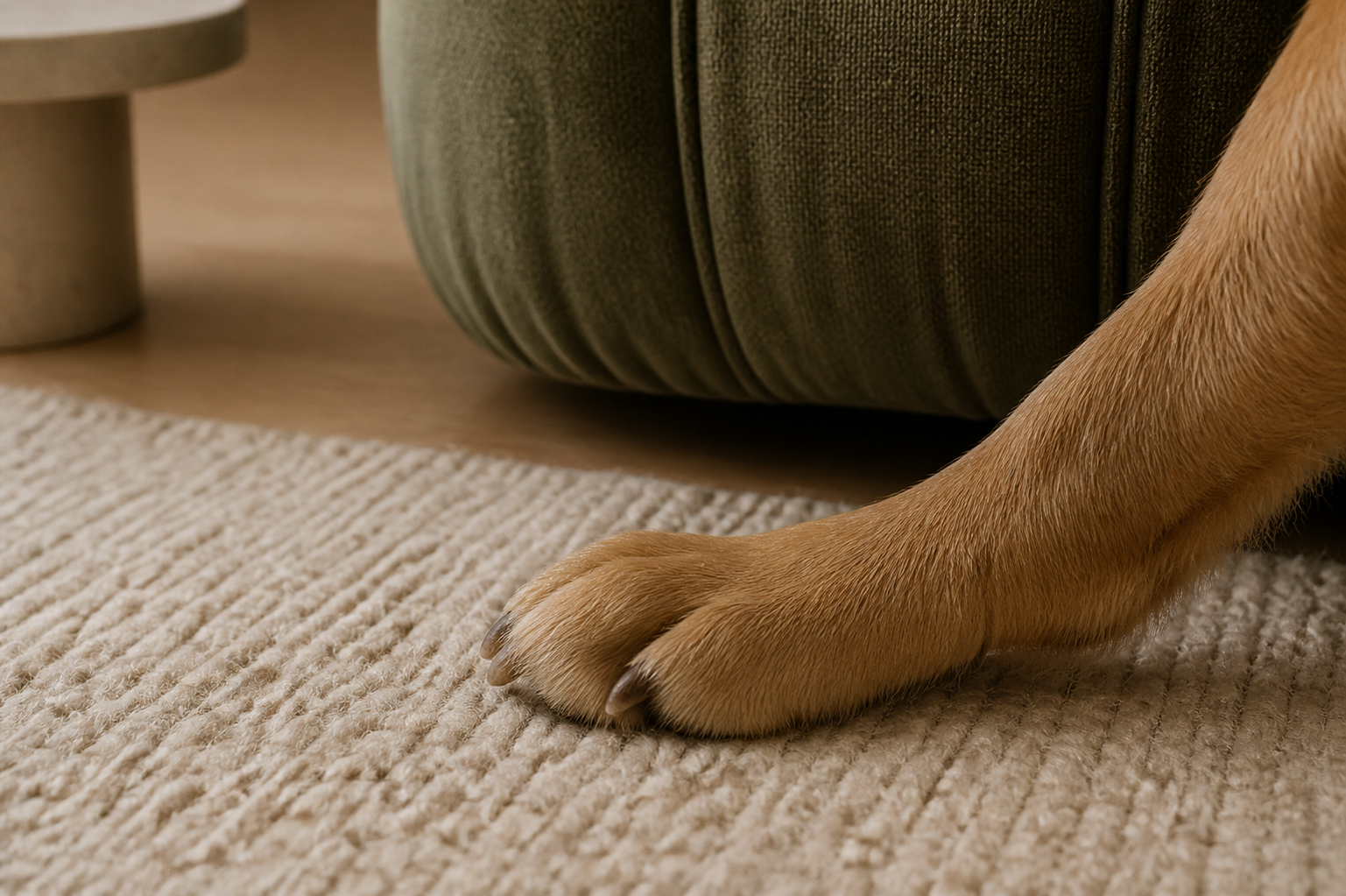
Performance fabric and a flatweave rug — built to take a hit.
2. Best Sofa Fabric for Pets and Kids: How to Shop for the Right One
The sofa takes more abuse than almost anything else in the house, so it's worth shopping for it properly rather than falling for the first one that looks good in a showroom. A few things to check before you buy:
Fabric: performance weaves, Crypton, microfibre or a tightly woven synthetic blend clean up far better than natural linen or cotton — the tighter the weave, the more pet and kid-friendly it is.
Colour: mid-tones and patterns hide more than you'd think — solid white or charcoal shows every mark.
Cushions: attached or high-density foam cushions hold their shape and don't become a chew toy the way loose feather inserts can.
Frame height: a slightly higher frame keeps things out of easy paw and toddler reach underneath.
Removable, washable covers: this one feature will save you more stress than any stain-guard treatment.
A pet and kid-friendly sofa that looks right and lives right is absolutely possible — it just means asking a few extra questions before you commit.
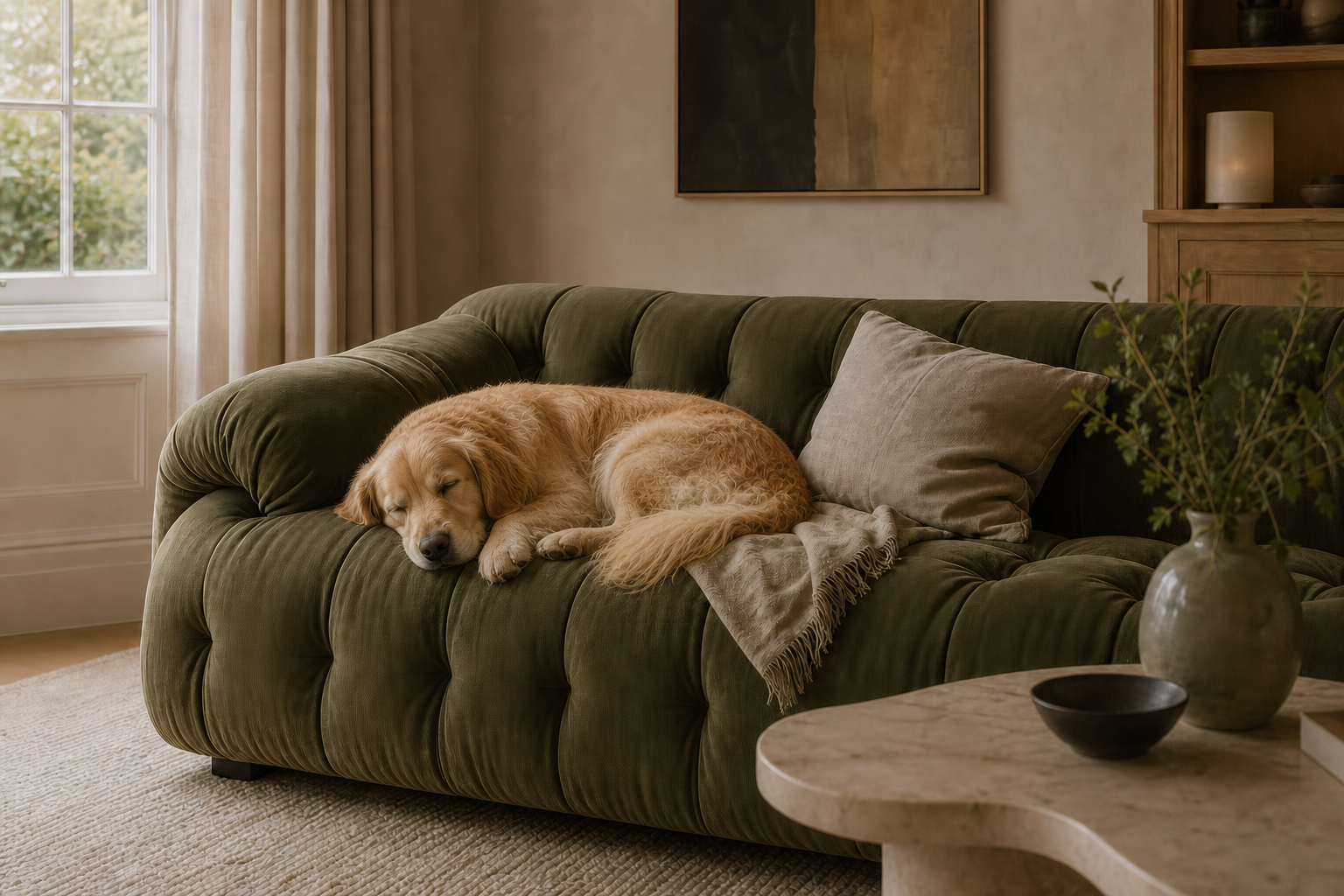
The right fabric means this still looks this good after year two.
3. Family-Friendly Kitchen Design: The Real Hub of the Home
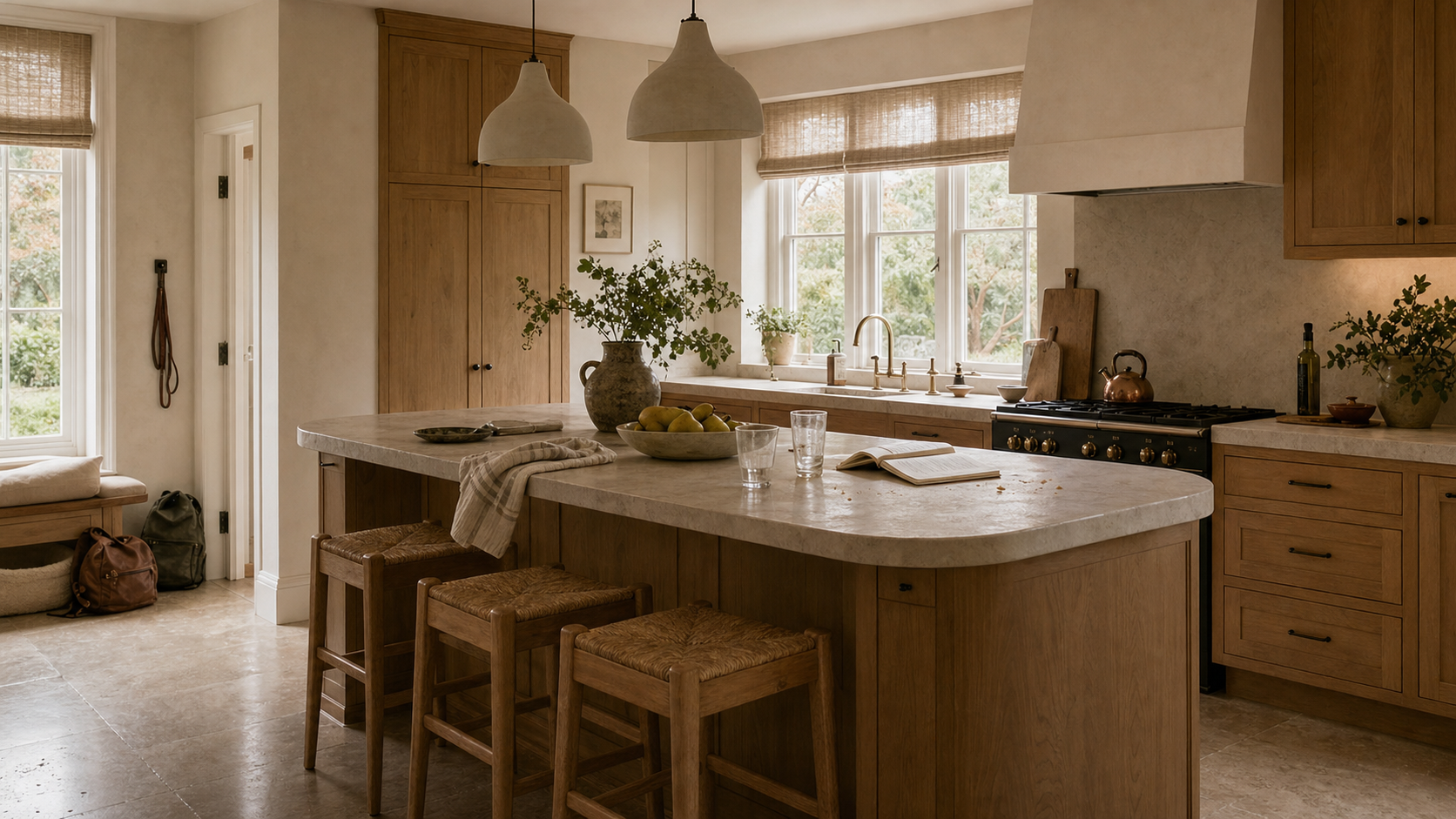
The kitchen is rarely just a kitchen anymore — it's homework central, the dog's feeding station, and where everyone ends up regardless of what room they started in. Design it accordingly. Durable countertops (quartz or honed granite over marble, if you're realistic about lemon juice and permanent markers), an easy-wipe splashback, and low, accessible storage for the everyday stuff you're grabbing ten times a day all make a real difference to family-friendly kitchen design.
If there's room, a dedicated pet feeding nook or a landing zone for school bags and leads keeps the chaos contained to one spot rather than spread across every surface.
4. Build in Flexible, Multi-Use Living Room Design
Family life changes fast, and a space that only does one thing will feel outdated within a year. A playroom today might need to be a homework station or a home office tomorrow. Choose furniture that can be reconfigured, storage that adapts, and living room design that doesn't box a room into a single purpose. This is also where good design earns its keep — flexible doesn't have to mean unfinished or temporary.
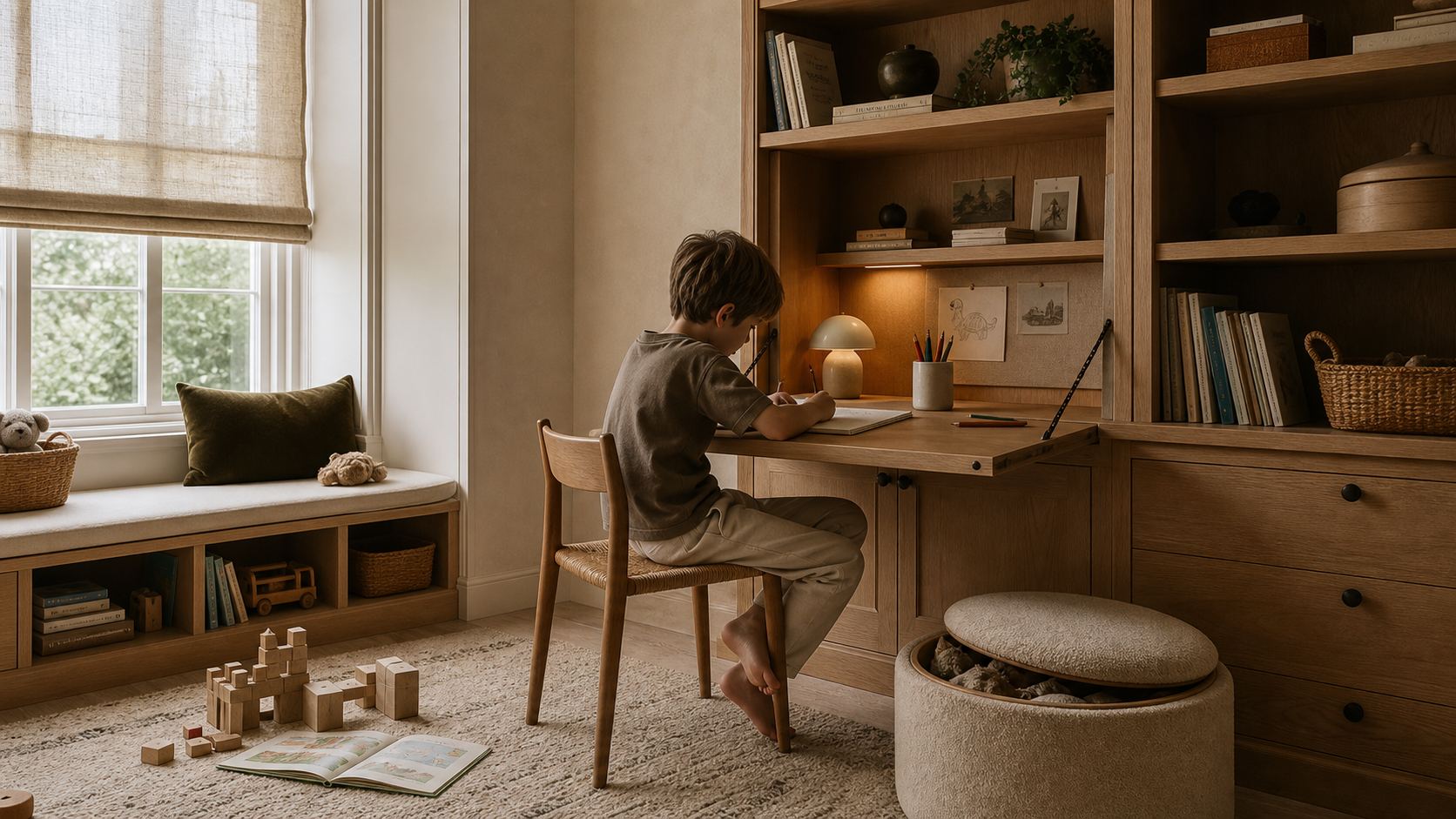
Built to be a playroom now, a study later.
5. Don't Skip the Safety Layer
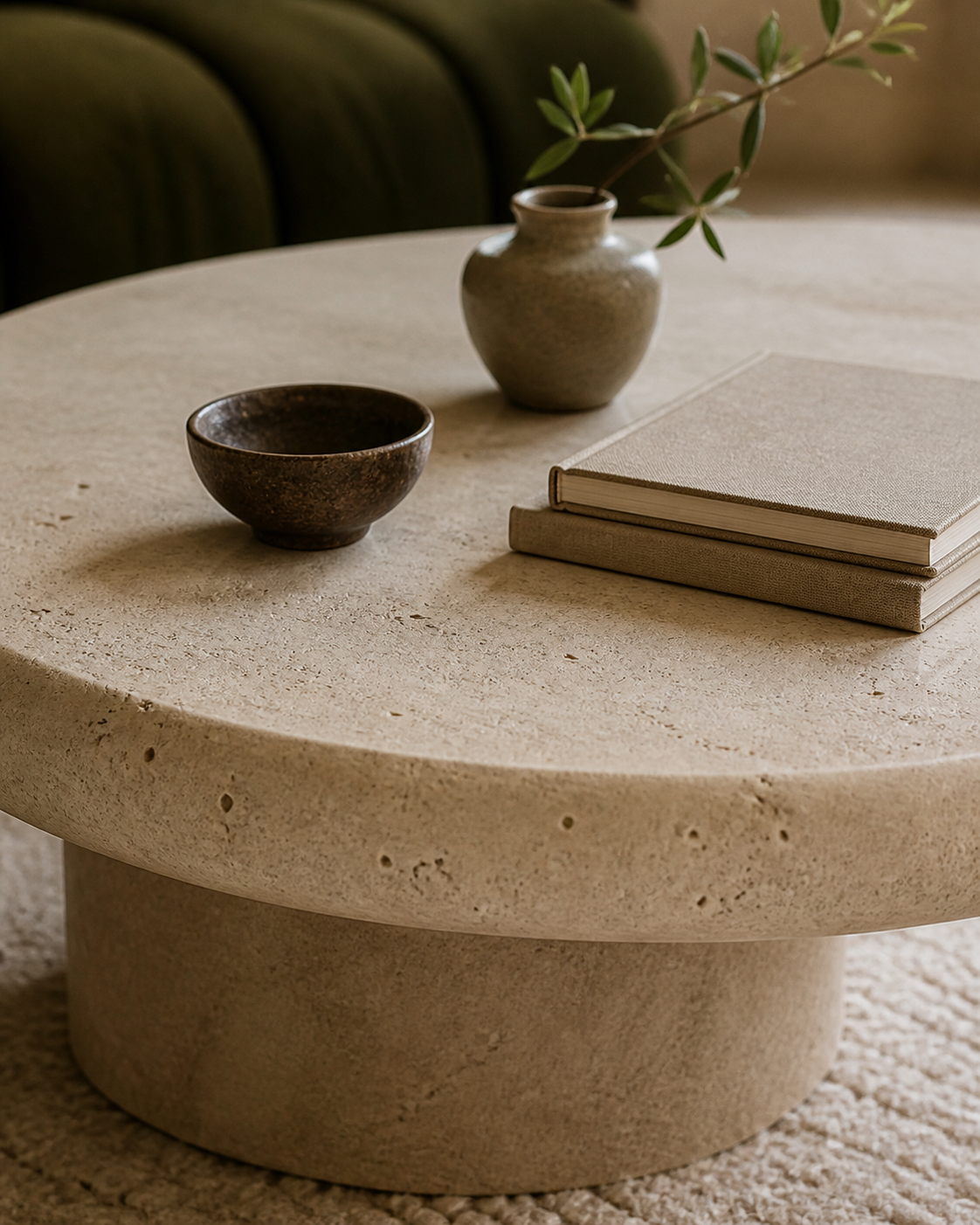
This is the fundamental that's easy to treat as an afterthought, but it shouldn't be. Rounded edges on coffee tables, furniture anchored to walls, clear sightlines from the kitchen to the living space, and non-slip flooring in busy zones all matter more once there are small feet or paws moving through the house. The best version of this is done at the design stage, not bolted on later — a beautifully rounded table edge looks intentional, whereas a corner guard added after the fact never does.
A More Personal One: 6-Week Summer Holiday Decluttering Guide
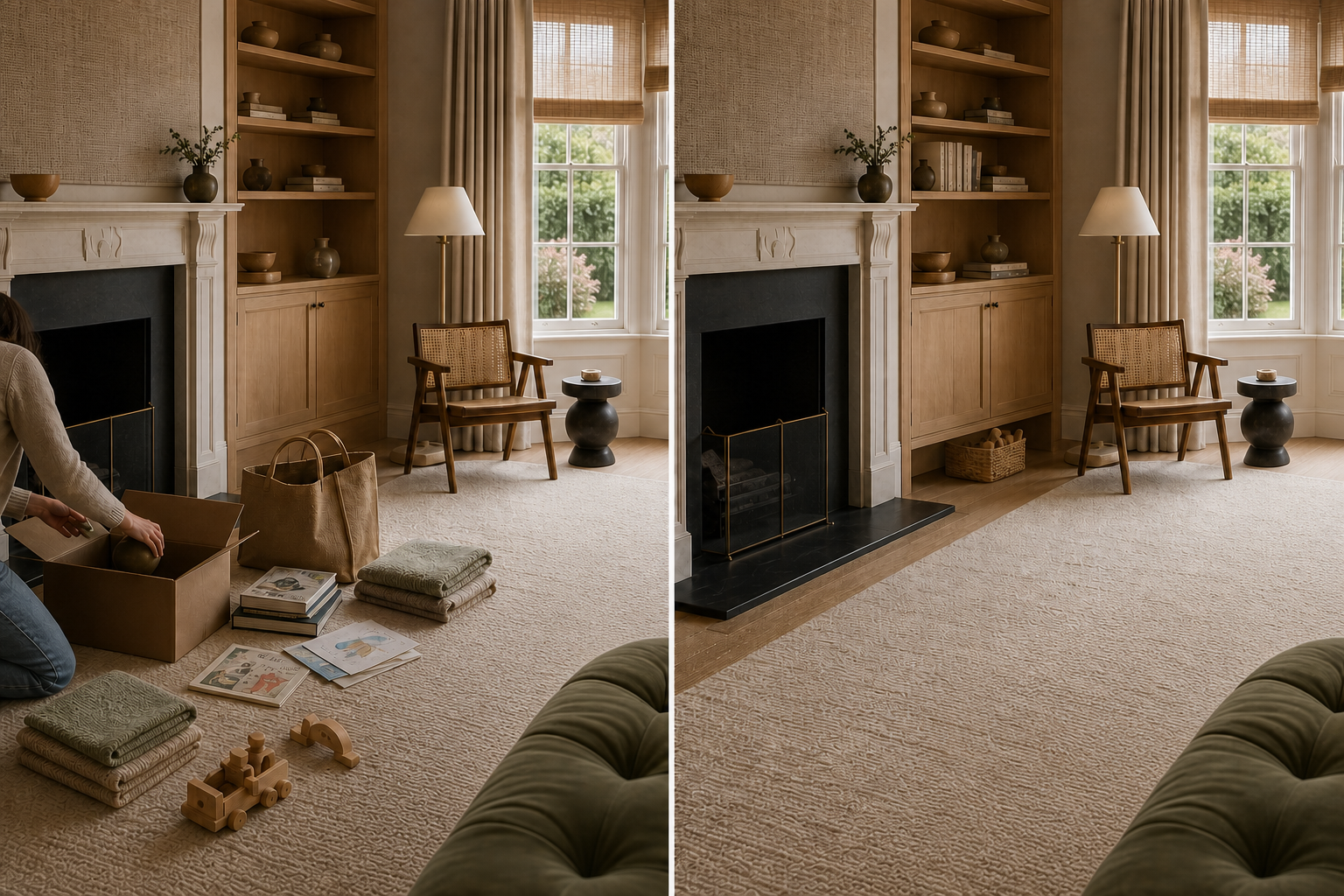
With the school summer holidays stretching out ahead, this is the one time of year I actually get a proper run at decluttering and resetting our own home — and I know I'm not alone in that. Here's the loose structure I use, spread over the six weeks so it never feels overwhelming:
Weeks 1–2: Edit, don't organise yet. Before you buy a single storage box, go room by room and remove what you don't need. Outgrown clothes, broken toys, duplicate kitchen gear — get it out of the house first. Organising clutter just makes tidier clutter.
Weeks 3–4: Reset the high-traffic zones. Focus on the spaces that get hit hardest — entryway, kitchen, playroom. These are the rooms that make the whole house feel chaotic when they're off, so getting them right has the biggest payoff.
Week 5: Deal with storage properly. Now that you know what's actually staying, invest in storage that suits it — baskets, labelled bins, a proper linen cupboard system. This is also the point to reassess whether your current furniture is doing its job or just taking up space.
Week 6: Enjoy it before term starts again. Leave the last week clear. No projects, no lists — just a home that's genuinely easier to live in before the school run routine takes back over.
A home that works for your family and your pets isn't about giving anything up design-wise. It's about making a handful of smart decisions early, so the space can actually keep up with real life.